![]()
Not your grandma's bandageCourtesy Ivy DawnedResearchers at the University of Bath have developed a wound dressing that can detect infection. In the presence of disease-causing pathogenic bacteria, tiny nanocapsules release dye that fluoresces under UV light. Currently, these wound dressings are being used for pediatric burn victims, whose immature immune systems make them particularly susceptible to infection.
![]()
HIV KillerCourtesy Bob PetersonAre bees the key to stopping the spread of HIV?!
![]()
Carbon NanotubesCourtesy MstroeckAh, the potential uses of carbon nanotubes. You could make bullet-stopping combat jackets, stronger cement, stronger and lighter sports equipment, a space elevator, or.......a cupid. A student from Brigham Young University made a teeny cupid using carbon nanotubes. Though this cupid may not impact society the way a space elevator would, it's still pretty amazing how researchers are able to create things using such tiny building blocks.
![]()
Carbon Galaxy: www.mrs.orgCourtesy Materials Research Society Science-as-Art Competition and Vilas Pol, Michael Tackeray, Dean Miller and Michele Nelson, Argonne National LaboratoryEvery year, scientists attending the Materials Research Society conference can enter in the Science as Art competition. The images they submit are created by manipulating teeny-tiny particles. There's a great video about this competition as well.
I think the prize for the winners is 5 minutes away from the scanning electron micrograph.
![]()
Sniffing Out Cancer: Amherst chemists develop a way to "smell" cancer cells.Courtesy Jeremie63Chemists from the University of Massachusetts Amherst have developed a way to quickly and accurately detect and identify metastatic cancer cells in living tissue, in much the same way that your nose can detect and identify certain odors.
The smell of a rose, for example, is a unique pattern of molecules, which activates a certain set of receptors in your nose. When these specific receptors are triggered, your brain immediately recognizes it as a rose.
Similarly, each type of cancer has a unique pattern to the proteins that make up its cells. The Amherst chemists just needed a "nose" to recognize these patterns. What they came up with was an array of gold nanoparticle sensors, coupled with green fluorescent proteins (GFP). The researchers took healthy tissue and tumor samples from mice, and trained the nanoparticle-GFP sensors to recognize the bad cells, and for the GFP to fluoresce in the presence of metastatic tissues.
This method is really sensitive to subtle differences, it's quick (can detect cancer cells within minutes), it can differentiate between types of cancers, and is minimally invasive. The researchers haven't tested this method on human tissue samples yet, but it holds some exciting potential.

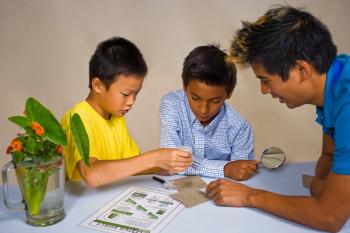
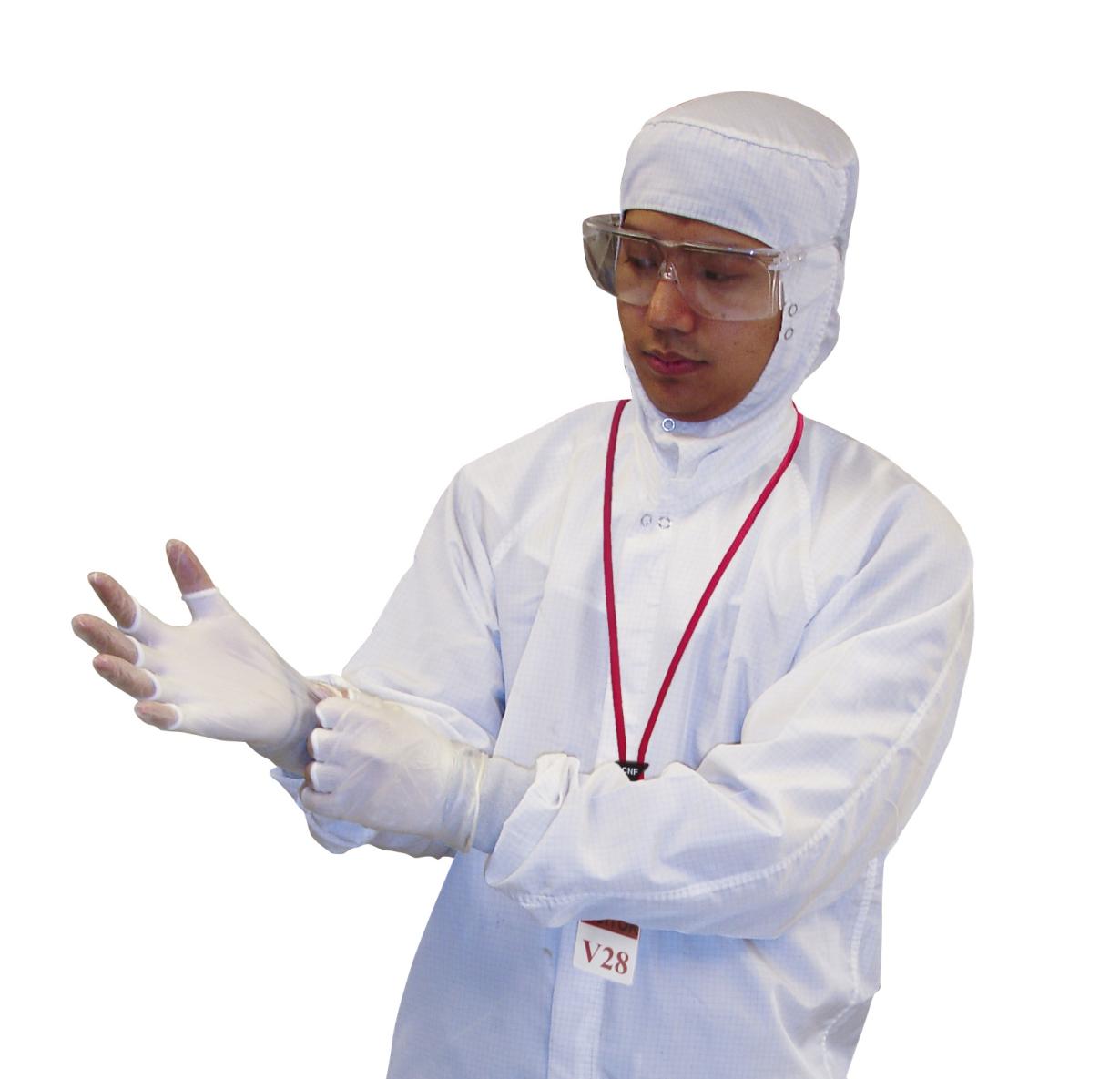
Nano at home!: Forget those super-sterile clean rooms. The DIY Nano app lets you explore nanoscale science in the comfort of your own home!Courtesy NISE NetworkWhen things get really really small (nanoscale small), they behave completely differently! For example, gold at the nanoscale can look purple, orange, or red; static electricity has a greater effect on nanoparticles than gravity; and aluminum (the stuff your benign soda cans are made of) is explosive at the nanoscale!
If you want to experience some of these nanoscale phenomena first-hand, check out whatisnano.org, or download the DIY Nano app. The website and the app were both created by the Nanoscale Informal Science Education Network (NISE Net for short), and have videos and activity guides, complete with instructions and material lists, so you can do some nano experiments at home! The app was a Parents' Choice award winner for 2012, and was featured in Wired Magazine's review of apps. Definitely worth a look!
Have fun exploring nanoscale properties!
![]()
Graphene fixes itself: Graphene uses loose carbon atoms to re-knit its damaged structure.Courtesy ksoAs a happy accident, scientists from the University of Manchester learned that graphene (sheets of carbon atoms arranged in a honeycomb crystal lattice, just one atom thick – think chicken wire) can repair itself spontaneously. Graphene is a semi-metal that conducts electricity very easily. It has potential uses in not only electronics, but also DNA sequencing, desalination, and it has been found to be a great antimicrobial.
The Manchester researchers were originally trying to understand how metals react with graphene, which will be an important part of incorporating it into everyday electronic devices. They found, much to their dismay, that some metals actually damaged graphene’s structure by punching holes in its neatly-arranged lattice. This is not a good thing if you’re trying to create a graphene-based device. However, quite unexpectedly, the graphene started to mend itself spontaneously, using nearby loose carbon atoms! As stated by the Scientific Director at the Daresbury Laboratory, Dr. Quentin Ramasse, this could mean the “difference between a working device and a proof of concept with no real application.” It also means that graphene just jumped to the top of my “baller carbon allotropes” list.
![]()
Sprayable Battery: Move over spray-tan, there's a new aerosol in town.Courtesy Alex WalkerResearchers from Rice University have rethought the battery. Typically, batteries are made up of 5 layers: a positive and negative electrode, each with a metal current collector, and a polymer separator. These layers are manufactured in sheets and then rolled into cylinders. Rice researchers realized that each of these layers were available, or could be created, in sprayable form. They used lithium titanium oxide and lithium cobalt oxide for the anode and cathode, existing metallic paints and carbon nanotube mixtures for the current collectors, and a chemical hodge-podge with a very lengthy name for the separator layer. The result is an ultra thin (a fraction of a millimeter thick) lithium ion battery.
In their first experiment, researchers sprayed each consecutive layer onto nine bathroom tiles, topped with a solar cell. The resulting batteries were able to power 40 LEDs for six hours.
In its current state, this method is too toxic to be used outside a controlled environment, but with a little tweaking, a safe alternative will be found. At that point, any surface could be a battery!
![]()
Ferrofluid + Watercolor= Purty: Photographer Fabian Oefner captures the beautiful effects of combining watercolor and ferrofluid.Courtesy Fabian OefnerEver wonder what adding watercolor to ferrofluid might look like? Yeah, me neither. But photographer Fabian Oefner did, and this is the result – cool, psychedelic, maze-like images!
Ferrofluid is a colloidal liquid that’s made up of nanoparticles of iron, suspended in a fluid (usually water). Because it’s basically liquid iron, it becomes magnetized when exposed to a magnetic field, and ends up looking like a spiky mound. What Fabian did to create these cool images was to inject watercolors into a magnetized puddle of ferrofluid. The nanoparticles of iron then rearrange themselves into channels and pools to accommodate the paint, creating these colorful labyrinths. I highly recommend watching the video that demonstrates this process – it’s mesmerizing!
![]()
Sensing Strain: This new system will allow you to detect strain anywhere, in any direction, and at any time.Courtesy Bruce WeismanScientists at Rice University developed a new type of paint, infused with carbon nanotubes, that can detect strain in bridges, buildings, and airplanes before the signs of deformation become visible to the naked eye.
This is how it works: The paint is applied to the desired structure and allowed to dry. A laser beam is then focused on the structure, which excites the carbon nanotubes, and in turn, causes them to fluoresce in a way that indicates strain. Finally, a handheld infrared spectrometer is used to measure this fluorescence.
The advantage of strain paint over conventional strain gauges is that the gauge (the paint, in this case) and the read-out device don't have to be physically connected. Also, strain paint allows you to measure strain anywhere on the structure, and along any direction. This product is not yet on the market, but it will benefit all of us, as I'm sure we all find the structural integrity of our planes, bridges, and buildings to be pretty important.
![]()
Electricity from Viruses: Berkeley Lab scientists generate electricity using viruses.Courtesy Courtesy ksoScientists from the Berkeley Lab have developed a way to generate electricity from viruses! Their method is based on the piezoelectric properties of the virus, M13 bacteriophage. Piezoelectricity is the charge that accumulates in certain solids when a mechanical stress is applied to them (squeezing, pressing, pushing, tapping, etc.) The scientists realized that the M13 virus would be a great candidate for their research because it replicates extremely rapidly (no supply problems here), it’s harmless to humans (always a good thing), and it assembles itself into well-organized films (think chopsticks in a box). It was these films that they layered and sandwiched between gold-plated electrodes to create their nearly paper-thin generator. When this postage stamp-sized generator was tapped, it created enough electricity to flash a “1” on a liquid crystal screen.
The potential here is that someday we could put these super-thin generators in any number of places, and harness electricity by doing normal, everyday tasks like walking or closing doors. I propose putting them in the shoes of marathon runners and then have cell phone charging stations along the route. Nothing is more maddening than waiting all day in the rain to get an action shot of your runner, only to find that your battery has since died by the time your slow-poke reaches the finish line. There’s always next year.
![]()
Electricity from Viruses: Berkeley Lab scientists generate electricity using viruses.Courtesy Courtesy ksoScientists from the Berkeley Lab have developed a way to generate electricity from viruses! Their method is based on the piezoelectric properties of the virus, M13 bacteriophage. Piezoelectricity is the charge that accumulates in certain solids when a mechanical stress is applied to them (squeezing, pressing, pushing, tapping, etc.) The scientists realized that the M13 virus would be a great candidate for their research because it replicates extremely rapidly (no supply problems here), it’s harmless to humans (always a good thing), and it assembles itself into well-organized films (think chopsticks in a box). It was these films that they layered and sandwiched between gold-plated electrodes to create their nearly paper-thin generator. When this postage stamp-sized generator was tapped, it created enough electricity to flash a “1” on a liquid crystal screen.
The potential here is that someday we could put these super-thin generators in any number of places, and harness electricity by doing normal, everyday tasks like walking or closing doors. I propose putting them in the shoes of marathon runners and then have cell phone charging stations along the route. Nothing is more maddening than waiting all day in the rain to get an action shot of your runner, only to find that your battery has since died by the time your slow-poke reaches the finish line. There’s always next year.
![]()
World's smallest giraffe: Scanning electron microscopy (SEM) image depicting a baby giraffeCourtesy Image courtesy of the Materials Research Society Science as Art Competition and Shaahin Amini and Reza Abbaschian, University of California RiversideMaterials science is the study of the relationship between the structure of materials at the atomic or molecular scales and their properties at the macroscale. Materials scientists do a lot of monkeying around at super small scales, and the Materials Research Society (the organization that brings together materials scientists from academia, industry, and government) has given them a creative outlet. At each of their annual meetings, MRS includes a Science as Art competition, where any registered meeting attendee can enter an image they have created. The images are pretty amazing in their own right, but when you think about the methods, medium, and scale used to create them, it's truly mind-boggling! Here are some of the best entries from past meetings, and some video versions of selected works as well.
![]()
World's smallest giraffe: Scanning electron microscopy (SEM) image depicting a baby giraffeCourtesy Image courtesy of the Materials Research Society Science as Art Competition and Shaahin Amini and Reza Abbaschian, University of California RiversideMaterials science is the study of the relationship between the structure of materials at the atomic or molecular scales and their properties at the macroscale. Materials scientists do a lot of monkeying around at super small scales, and the Materials Research Society (the organization that brings together materials scientists from academia, industry, and government) has given them a creative outlet. At each of their annual meetings, MRS includes a Science as Art competition, where any registered meeting attendee can enter an image they have created. The images are pretty amazing in their own right, but when you think about the methods, medium, and scale used to create them, it's truly mind-boggling! Here are some of the best entries from past meetings, and some video versions of selected works as well.
![]()
Otzi the IcemanCourtesy South Tyrol Museum of Archaeology via WikipediaOtzi, the five-thousand year-old corpse found frozen in a glacier in the Alps in 1991 has given up more secrets. Using a nano-sized probe, scientists at The Institute for Mummies and the Iceman in Bolzano, Italy have successfully extracted from the 5300 year-old "Iceman" the oldest samples of human blood known. The find surpasses that of Egyptian mummies by 2000 or so years, the previous record holder. What's more, the researchers have determined that Otzi died fairly quickly after taking an arrow in the back. Fibrin, a blood clotting protein that appears in fresh wounds then disappears as healing progresses, was present in the samples. This means the healing process stopped soon after Otzi was shot.
SOURCES
Nat Geo story
New Scientist article
![]()
Otzi the IcemanCourtesy South Tyrol Museum of Archaeology via WikipediaOtzi, the five-thousand year-old corpse found frozen in a glacier in the Alps in 1991 has given up more secrets. Using a nano-sized probe, scientists at The Institute for Mummies and the Iceman in Bolzano, Italy have successfully extracted from the 5300 year-old "Iceman" the oldest samples of human blood known. The find surpasses that of Egyptian mummies by 2000 or so years, the previous record holder. What's more, the researchers have determined that Otzi died fairly quickly after taking an arrow in the back. Fibrin, a blood clotting protein that appears in fresh wounds then disappears as healing progresses, was present in the samples. This means the healing process stopped soon after Otzi was shot.
SOURCES
Nat Geo story
New Scientist article
Buckyballs are tiny spherical molecules made up of 60 carbon atoms arranged in what looks like a soccer ball, or a truncated icosahedron for those shape fans out there. Buckyballs are found naturally in soot and have even been found in deep space. They look promising for the medical field, for the development of a new class of battery, and now they may even be the key to living longer!![]()
Buckminsterfullerene: Just a spoonful of buckyballs helps......you live longer.Courtesy Bryn C
In a recent study, scientists found that ingesting buckyballs can add years to your life! Well, if you're counting in rat-years. Scientists, in an attempt to better understand the toxicity of ingested buckyballs, gave three groups of rats different things to eat. One group, the control group, was fed a regular rat diet; the second group was fed olive oil; and the third, thought-to-be-ill-fated group, was fed olive oil laced with buckyballs. They found that the control group had a median lifespan of 22 months, the olive oil group had a 26-month lifespan, and the buckyball group had a 42-month lifespan – almost double that of the control group! I’m sure that was quite a surprise for the scientists.
As intriguing as these findings are, don’t go out and eat sooty olive oil…..I don’t think you’ll get the right results. This is just one study, and there’s a lot more research that needs to be done before they start selling Buckyballive oil.